Peer-Reviewed Conference Proceedings
- A. Gavade et al., “How Teacher Feedback Helped Reimagine, Redesign, and Recode a Sustainability Education App”, 2023 IEEE Global Humanitarian Technology Conference (GHTC), Santa Clara, CA, USA, 2023 (under review)
- A. F. Santana et al., “Save Tuba: A Gamified Approach to Fostering Sustainable Habits”, 2023 IEEE Global Humanitarian Technology Conference (GHTC), Santa Clara, CA, USA, 2023 (under review)
- A. F. Santana et al., “Save Tuba: A Gamified App for Children to Explore Environmental Issues and Develop Sustainable Behaviors,” 2022 IEEE Global Humanitarian Technology Conference (GHTC), Santa Clara, CA, USA, 2022, pp. 299-306, doi: 10.1109/GHTC55712.2022.9911044.
- Abstract: Like many other countries, Kazakhstan has committed to carbon neutrality but is burdened by a fossil fuel-dependent economy that is particularly vulnerable to climate change. The net impact of various policy, technology, and business innovations aimed at transitioning to a greener economy are limited by the knowledge and behaviors of the populace. Integrating environmental education into the schooling system is underway but progress on behavioral change is glacial. Gamification and inquiry-based learning are transformative pedagogical tools that leverage students’ natural creativity to reinforce fundamental concepts while encouraging deeper engagement. This article describes “Save Tuba,” a mobile game application designed for second through fifth grade students to help them explore environmental issues and develop sustainable behaviors. Children build an emotional connection with Tuba, a saiga antelope whose natural habitat on the vast Kazakh steppes is threatened by humans, as they embark on a series of exciting and meaningful adventures. The article discusses the app’s creation journey, narrative structure, pedagogical foundations, human-centered design processes, and curricular content.
URL: https://ieeexplore.ieee.org/stamp/stamp.jsp?tp=&arnumber=9911044&isnumber=9910605
- Abstract: Like many other countries, Kazakhstan has committed to carbon neutrality but is burdened by a fossil fuel-dependent economy that is particularly vulnerable to climate change. The net impact of various policy, technology, and business innovations aimed at transitioning to a greener economy are limited by the knowledge and behaviors of the populace. Integrating environmental education into the schooling system is underway but progress on behavioral change is glacial. Gamification and inquiry-based learning are transformative pedagogical tools that leverage students’ natural creativity to reinforce fundamental concepts while encouraging deeper engagement. This article describes “Save Tuba,” a mobile game application designed for second through fifth grade students to help them explore environmental issues and develop sustainable behaviors. Children build an emotional connection with Tuba, a saiga antelope whose natural habitat on the vast Kazakh steppes is threatened by humans, as they embark on a series of exciting and meaningful adventures. The article discusses the app’s creation journey, narrative structure, pedagogical foundations, human-centered design processes, and curricular content.
- T. Persaud, U. Amadi, A. Duane, B. Youhana and K. Mehta, “Smart City Innovations to Improve Quality of Life in Urban Settings,” 2020 IEEE Global Humanitarian Technology Conference (GHTC), Seattle, WA, USA, 2020, pp. 1-8, doi: 10.1109/GHTC46280.2020.9342905.
- Abstract: While definitions of a Smart City vary, they unequivocally emphasize improvement in the quality of life for citizens through approaches such as improved mobility and transportation systems, a more resilient built environment, or identifying and mitigating various kinds and sources of pollution. Ultimately, the characteristics of a Smart City are defined by its innovations. Motivated by the exponential growth in the number of large cities as well as their populations, municipal and regional governments worldwide have begun to implement smart innovations to manage everyday activities more efficiently. Smart city innovations range in scope, some more technological or data-oriented than others, but for all, the main goal is to effectively meet the evolving needs of its citizens. This paper discusses contemporary issues faced by cities, specifically those related to urban mobility and transportation, urban air pollution, quality of life, and accessibility for short-term visitors. Context-appropriate innovations that have successfully addressed some of these issues in different world regions are described with the overarching objective of inspiring and informing the next generation of smart city innovations.
URL: https://ieeexplore.ieee.org/stamp/stamp.jsp?tp=&arnumber=9342905&isnumber=9342622
- Abstract: While definitions of a Smart City vary, they unequivocally emphasize improvement in the quality of life for citizens through approaches such as improved mobility and transportation systems, a more resilient built environment, or identifying and mitigating various kinds and sources of pollution. Ultimately, the characteristics of a Smart City are defined by its innovations. Motivated by the exponential growth in the number of large cities as well as their populations, municipal and regional governments worldwide have begun to implement smart innovations to manage everyday activities more efficiently. Smart city innovations range in scope, some more technological or data-oriented than others, but for all, the main goal is to effectively meet the evolving needs of its citizens. This paper discusses contemporary issues faced by cities, specifically those related to urban mobility and transportation, urban air pollution, quality of life, and accessibility for short-term visitors. Context-appropriate innovations that have successfully addressed some of these issues in different world regions are described with the overarching objective of inspiring and informing the next generation of smart city innovations.
A Gamified Approach & Influential Storyline
The design of Save Tuba focuses on the employment of gamification to build digital games and immersive worlds where children not only learn key concepts, but practice sustainability. In doing so, they develop the kinds of behaviors, habits, and mindsets that will serve them for life. Empathy is a driving force for change and is encouraged through engaging storytelling and emotional engagement.

Cross-Generational Change
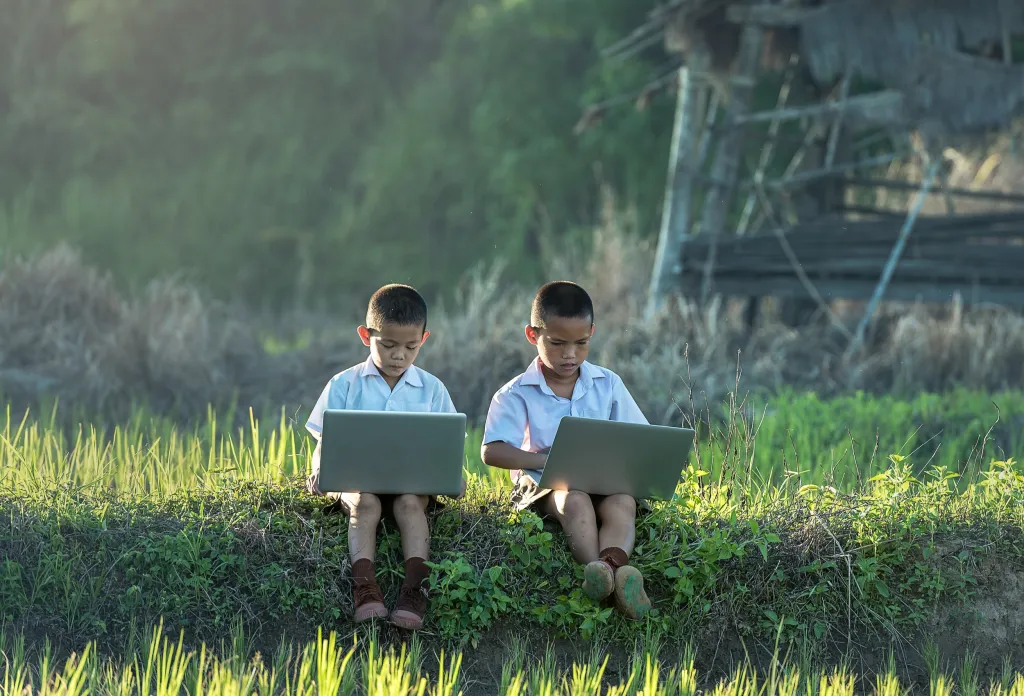
To create lasting impact, a focus on creating behavioral change is imperative to foster a community of sustainability- conscious Kazakhs. The country’s recent realization of the need for change and education is an opportunity to start from the ground up with Kazakhstan’s youngest citizens. Educating children about sustainability education and developing habits earlier rather than later will produce a longer lasting impact.